Messagetothemoon | SAAS Based SMS Sending Platform
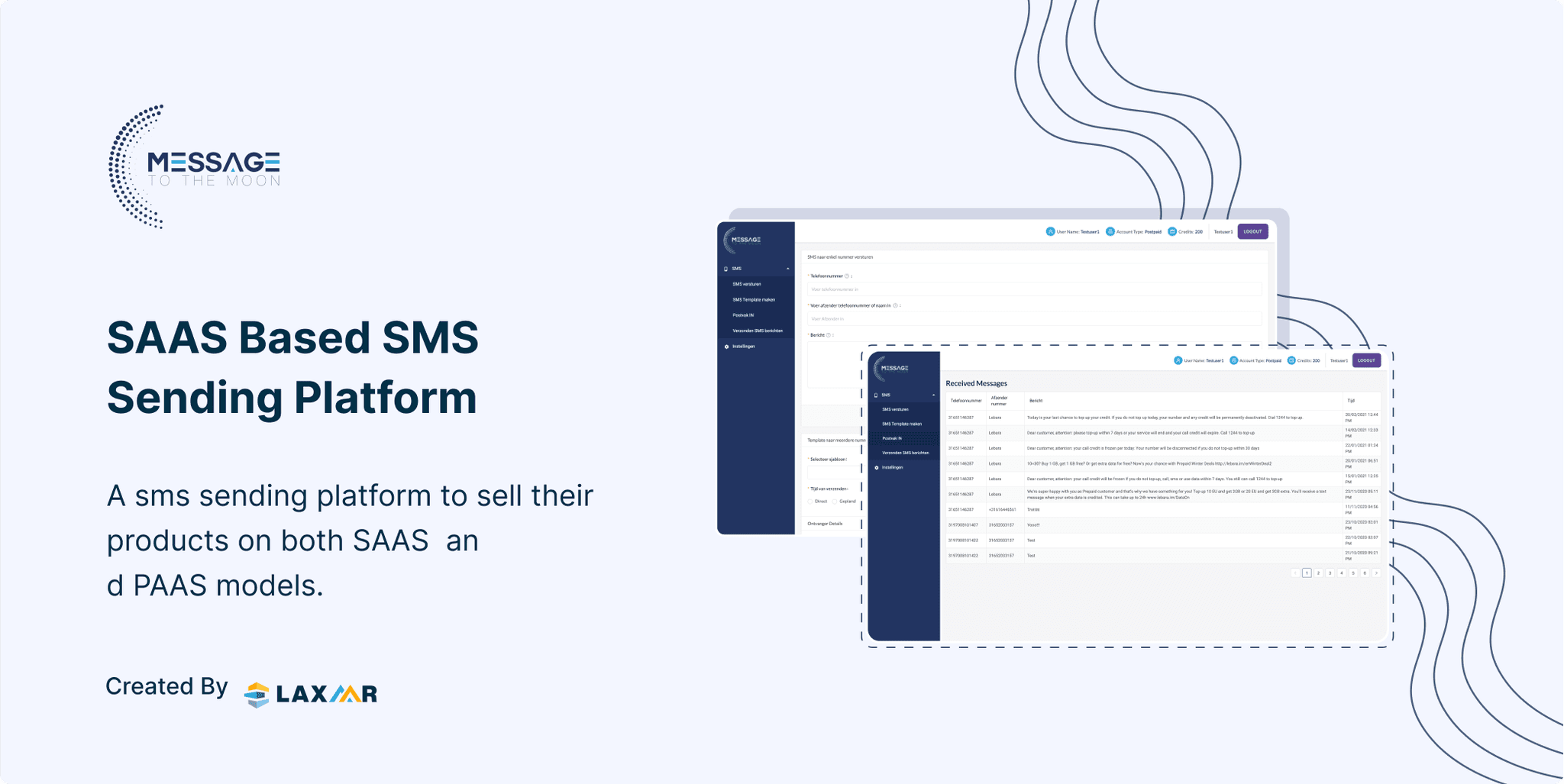
A sms sending platform to sell their products on both SAAS and PAAS based business models.
The Challenge
We got this project from a well-known SMS gateway brand in the Netherlands. Their primary goal was to sell their platform on both SaaS and PaaS models. A critical constraint was that the client was already managing their business from Salesforce — so building from scratch was off the table. We needed to build only what Salesforce couldn't handle, avoiding any migration and saving the client both time and cost.
What We Built
Salesforce Integration and SMS Management
We used Salesforce's API to pull the customer data we needed and to manage all SMS sending, receiving, and SMS Credits Management within the new web app. This kept the existing Salesforce workflows intact while adding the purpose-built functionality the client needed.
SaaS and PaaS User Experiences
For SaaS users, the web app works like a familiar Inbox/Outbox/Sent interface — simple by design. For PaaS business users, advanced API configuration is available to integrate the exposed API with different business workflows. PaaS users can, for example, create a flow to route all SMS to a specific email address, or vice versa.
Multilingual Support
The client needed a multilingual platform. We started with English and Dutch and architected the internationalization layer to allow any number of languages to be added without a rebuild.
Bulk SMS via CSV Upload and Merge
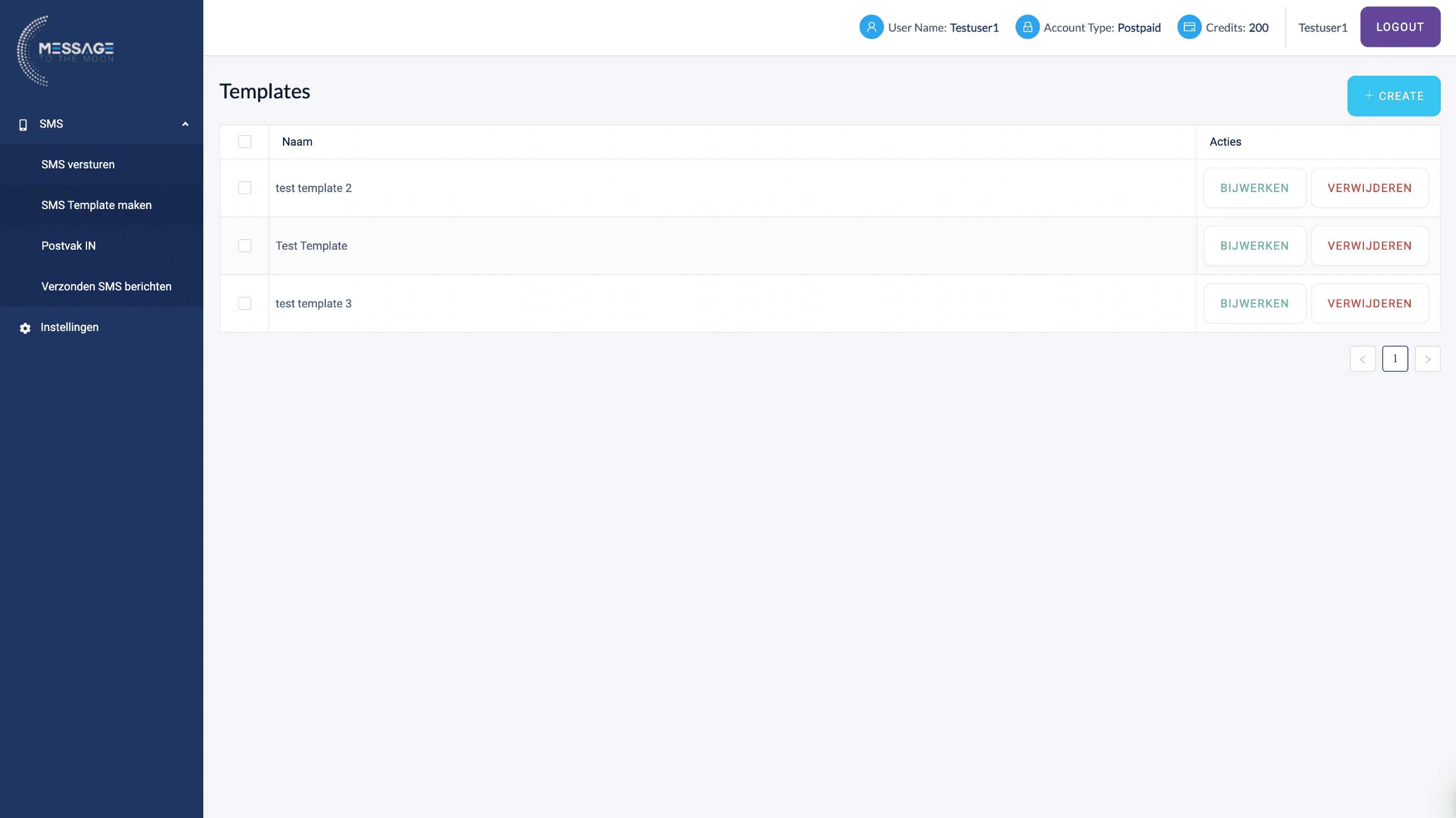
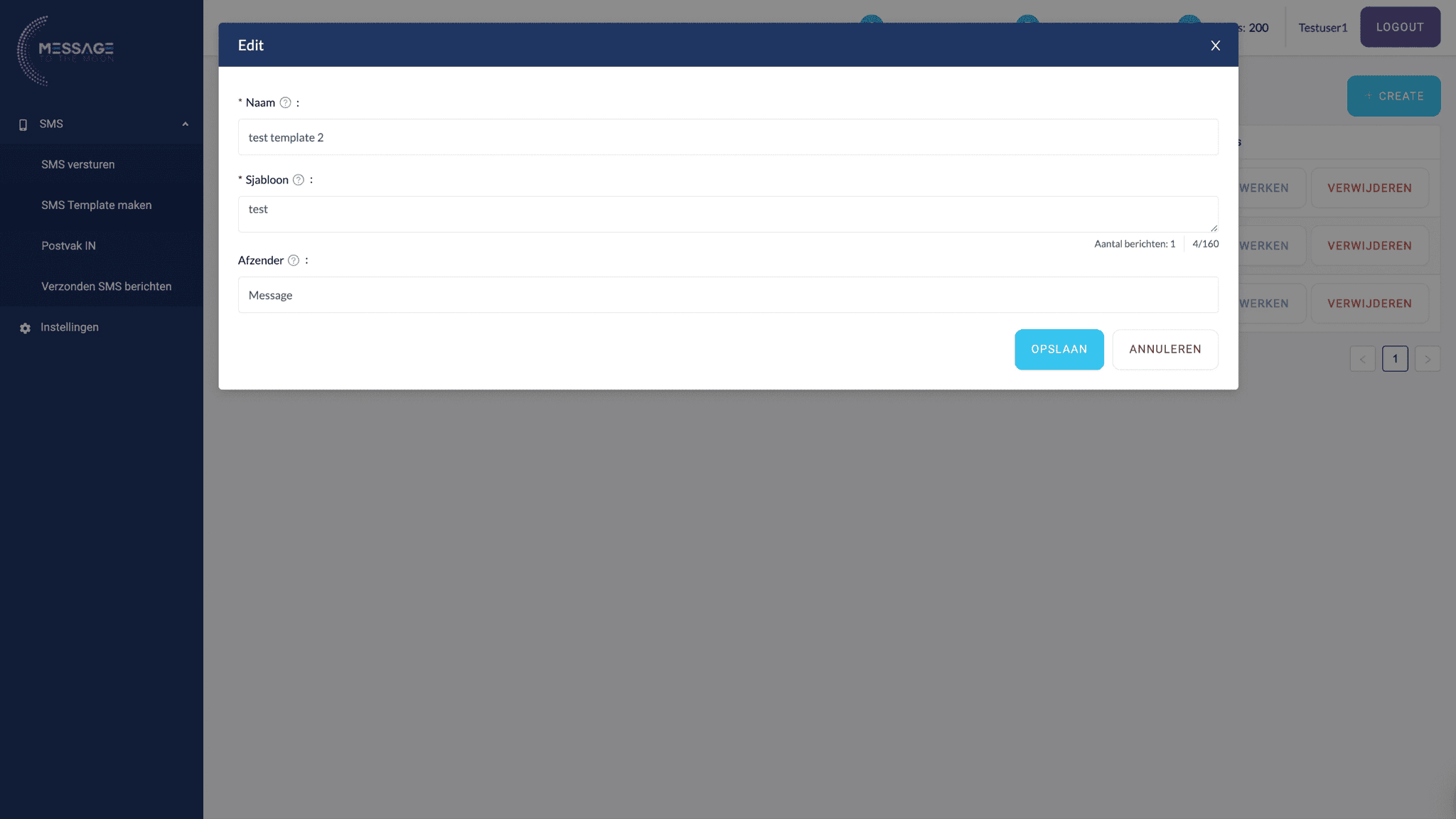
The most-used feature for both PaaS and SaaS users was bulk SMS via CSV upload and SMS merge. Users create SMS templates with dynamic variables, upload a CSV with the corresponding data, and the system merges the two to send bulk SMS — either immediately or on a schedule.
Prepaid and Postpaid Payment Support
The system supports both prepaid and postpaid payment mechanisms, with corresponding integrations via Salesforce to handle both billing models.
The Result
The platform gave the client a purpose-built SMS sending product layered on top of their existing Salesforce infrastructure — avoiding migration entirely. Both SaaS and PaaS customers got distinct, appropriate interfaces; bulk sending and scheduling removed the manual overhead for high-volume users; and multilingual support opened the platform to a broader European audience.